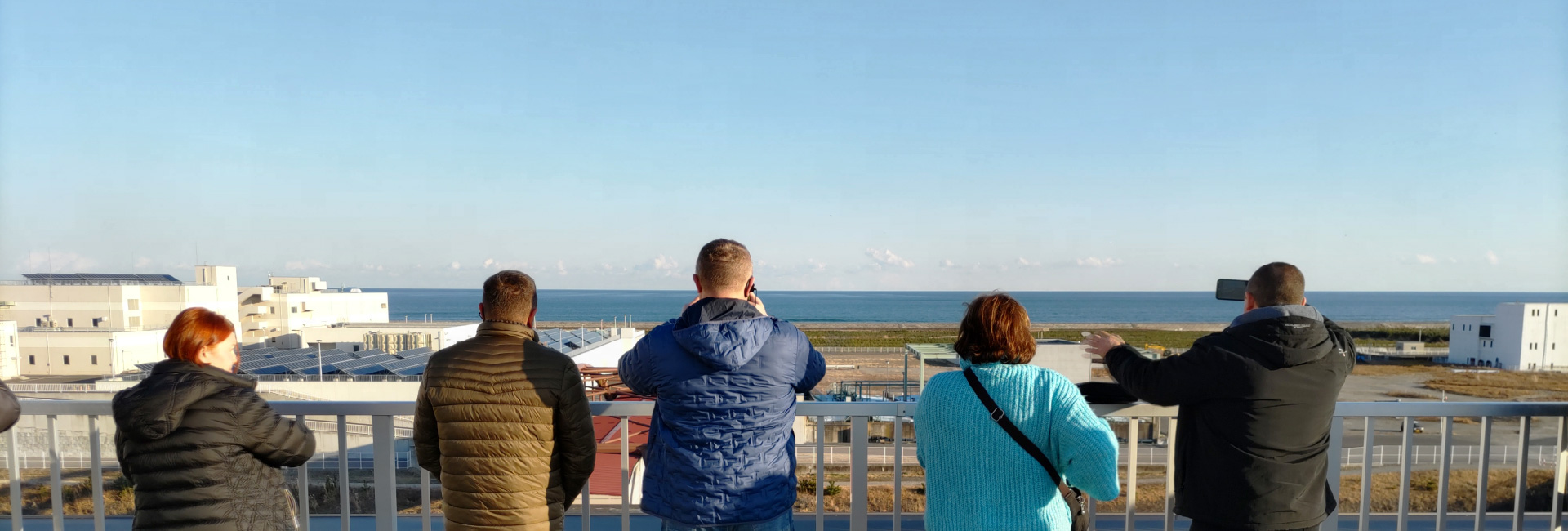
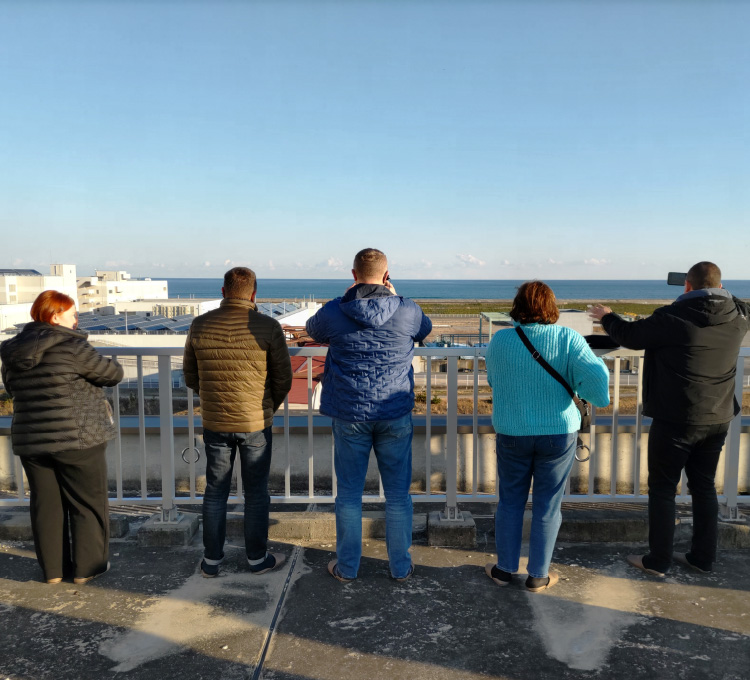
Sendai City offers study visits and briefing programs for local government officials, disaster-management practitioners, students, and others who are interested in our initiatives to build a disaster-resilient and environmentally-friendly city.
Programs can be tailored based on the number of participants and themes of interest. Please feel free to contact us for arrangements.
Study Visit Sites
1
Sendai 3/11 Memorial Community Center
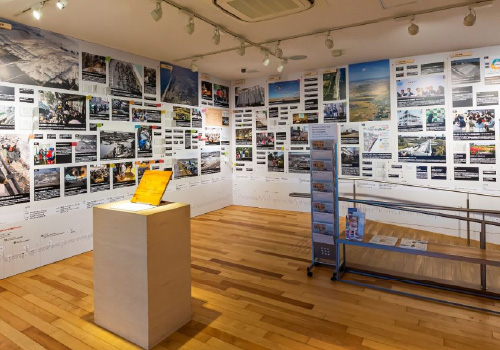
Facility Overview
Located adjacent to Arai Station on the Sendai Subway Tozai Line, this facility serves as a place to learn from the memories and experiences of the Great East Japan Earthquake and to pass down knowledge and lessons to future generations.
- Pamphlet
- Duration
30 minutes
2
Tsunami Evacuation Tower
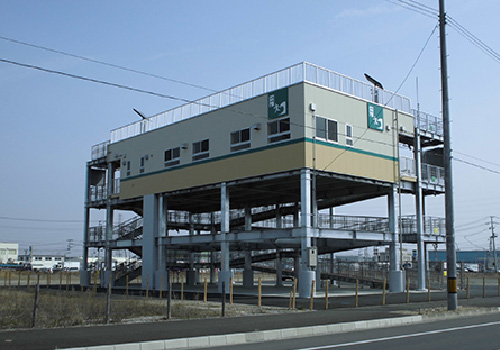
Facility Overview
To enable residents to evacuate from tsunamis, 13 tsunami evacuation towers have been constructed along the coastal areas of the city. The visit will consist primarily of viewing the towers from the vehicle.
- Note
Parking is prohibited on the roadways in front of tsunami evacuation towers. Please refrain from parking for observation. Please conduct the observation with due attention to safety.
3
Elevated Road
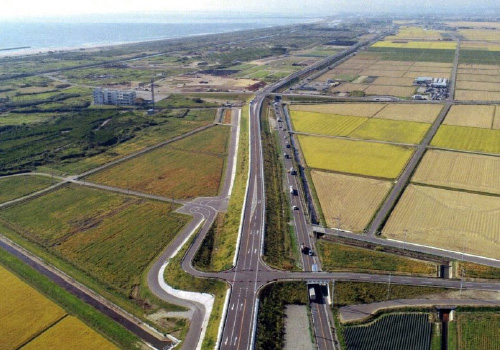
Facility Overview
Developed under the Sendai City Earthquake Disaster Reconstruction Plan, this elevated road serves as a key component of the city’s multiple defense system designed to mitigate tsunami damage. The visit will consist primarily of viewing the elevated road from the vehicle or from the rooftop of the Sendai Arahama Elementary School.
- Note
As the area is heavily trafficked, please conduct the observation with due attention to safety.
- Pamphlet
4
Ruins of the Great East Japan Earthquake: Sendai Arahama Elementary School
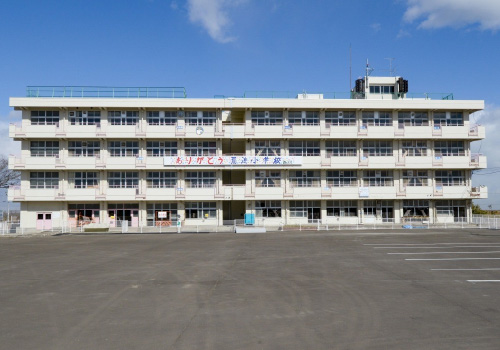
Facility Overview
This preserved disaster ruins site includes the school building damaged by the tsunami, maintained in its original condition. Together with photo displays taken immediately after the disaster, the facility conveys the power and threat of the tsunami and raise awareness of disaster prevention and mitigation.
- Pamphlet
- Duration
60 minutes
5
Ruins of the Great East Japan Earthquake:Residential Foundation, Arahama Area of Sendai City
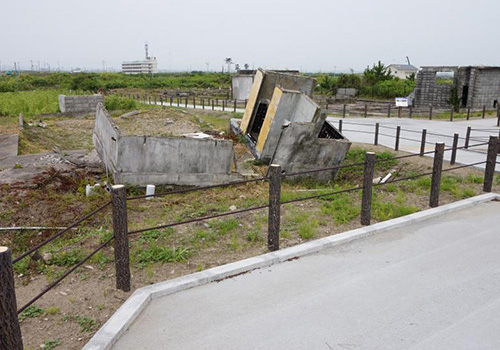
Facility Overview
This site preserves and exhibits the foundations of houses destroyed by the tsunami. To help visitors understand the scale of the tsunami damage, explanatory signboards are installed throughout the site, featuring explanations of the tsunami's threat along with photos and testimonies that convey the former way of life in Arahama before the disaster.
- Pamphlet
- Duration
30 minutes
6
Arahama Memorial Bell and Cenotaph
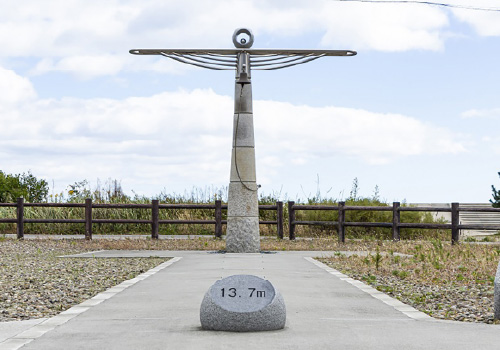
Facility Overview
The Arahama Memorial Bell stands as a local monument to honor those who lost their lives in the Great East Japan Earthquake and to ensure that the memory of Arahama is never forgotten.
Nearby, there is also a statue of Kannon (the Goddess of Mercy), erected by the local neighborhood association. The statue stands approximately 9 meters tall, nearly the same height as the tsunami that struck the Arahama District. The cenotaph bears the names of 192 victims.
- Duration
15 minutes
7
Minami-Gamo Wastewater Treatment Plant
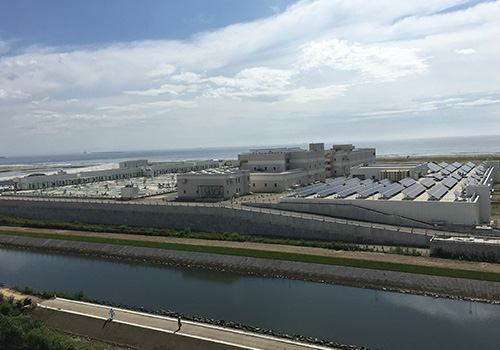
Facility Overview
This wastewater treatment facility, which processed approximately 70% of Sendai City’s sewage, sustained extensive damage from the earthquake and tsunami during the Great East Japan Earthquake. It was subsequently restored based on the Build Back Better concept, enabling the facility to withstand disasters of a similar scale.
- Duration
15 to 45 minutes
MAP
Sample Itinerary
Sendai Station
25 minutes by car or
13 minutes by subway
1Sendai 3/11 Memorial
Community Center
10 minutes
by car or
15 minutes
by bus
2Tsunami
Evacuation Tower
3Elevated Road
4Ruins of the Great East Japan
Earthquake: Sendai Arahama
Elementary School
1 minute by car or
5 minutes on foot
5Ruins of the Great East Japan
Earthquake:Residential Foundation,
Arahama Area of Sendai City
6Arahama Memorial Bell and Cenotaph
10 minutes by car
7Minami-Gamo Wastewater
Treatment Plant
Briefing Themes
1Efforts for making Sendai a disaster-resilient and environmentally-Friendly city
This session provides an overview of Sendai City’s initiatives to make Sendai a disaster-resilient and environmentally-friendly city, including city planning that incorporates the concept of “Build Back Better” and human capacity building to support community-based disaster risk reduction.
- Duration
Approximately 30 minutes
2Sendai City Disaster Prevention Plan
This session explains the Sendai City Regional Disaster Prevention Plan, the city’s most fundamental plan for disaster risk reduction.
It introduces the background to revisions made in light of the experiences and lessons from the Great East Japan Earthquake and introduces key disaster risk reduction measures described in the plan.
- Duration
Approximately 30 minutes
- Reference
3Disaster Waste Disposal
During the Great East Japan Earthquake, a massive amount of disaster waste—equivalent to approximately seven years of ordinary waste—was generated in Sendai City. Based on a pre-established plan, the City responded and completed the disposal in about three years. This session introduces the actual disaster-waste disposal process and outlines systems being developed in preparation for future disasters.
- Duration
Approximately 30 minutes
4Disaster Countermeasures for Critical Infrastructure
This session explains the disaster countermeasures for essential infrastructure closely connected to citizens’ daily lives, such as water and sewerage systems.
- Duration
Approximately 30 minutes
How to Apply
Please fill out the required fields in the application form and submit your request. Applications should be submitted at least one and a half months prior to the desired date of the study visit or briefing.
After we receive your application, we will review it within approximately one week, confirm the schedule and responsible department, and notify you by email (sent to the address listed on the application form) regarding whether your application can be accepted.
Notes Regarding Applications
- Please submit your application at least one and a half months prior to your preferred date.
- Study visits and briefings are free of charge, but travel expenses must be covered by participants. Please arrange your own transportation as needed.
- Depending on the operational circumstances of the relevant departments, we may not be able to accept your request. We appreciate your understanding.
- Guidance will be provided in Japanese. Applicants are responsible for arranging interpretation from Japanese (including interpretation during study visits).
- Presentation materials are generally provided in English. If you require materials in other languages, please arrange translation on your own.
Examples of Accepted Study Visits
Ukraine
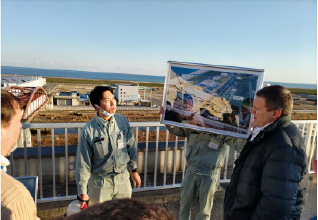
As a reference for postwar recovery-related waste management, we provided an overview of Sendai City’s waste treatment efforts and offered a tour of the Minami-Gamo Wastewater Treatment Plant. (Accepted as part of a JICA support project)
Bursa, Republic of Turkey
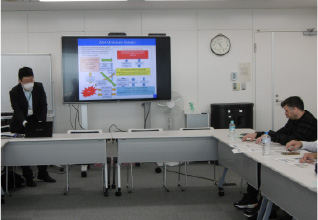
Under the theme of “Pre-disaster Investment in Disaster Risk Reduction,” we presented Sendai City's Disaster Prevention Plan, risk management structure, regular initiatives (such as public awareness and disaster drills), and disaster countermeasures for the water supply.
Ulaanbaatar, Mongolia
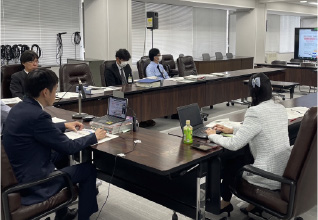
A virtual workshop was held to enable mutual learning between Ulaanbaatar and Sendai. In addition to sharing examples of disaster countermeasures, both sides engaged in active discussions.
ACCESS

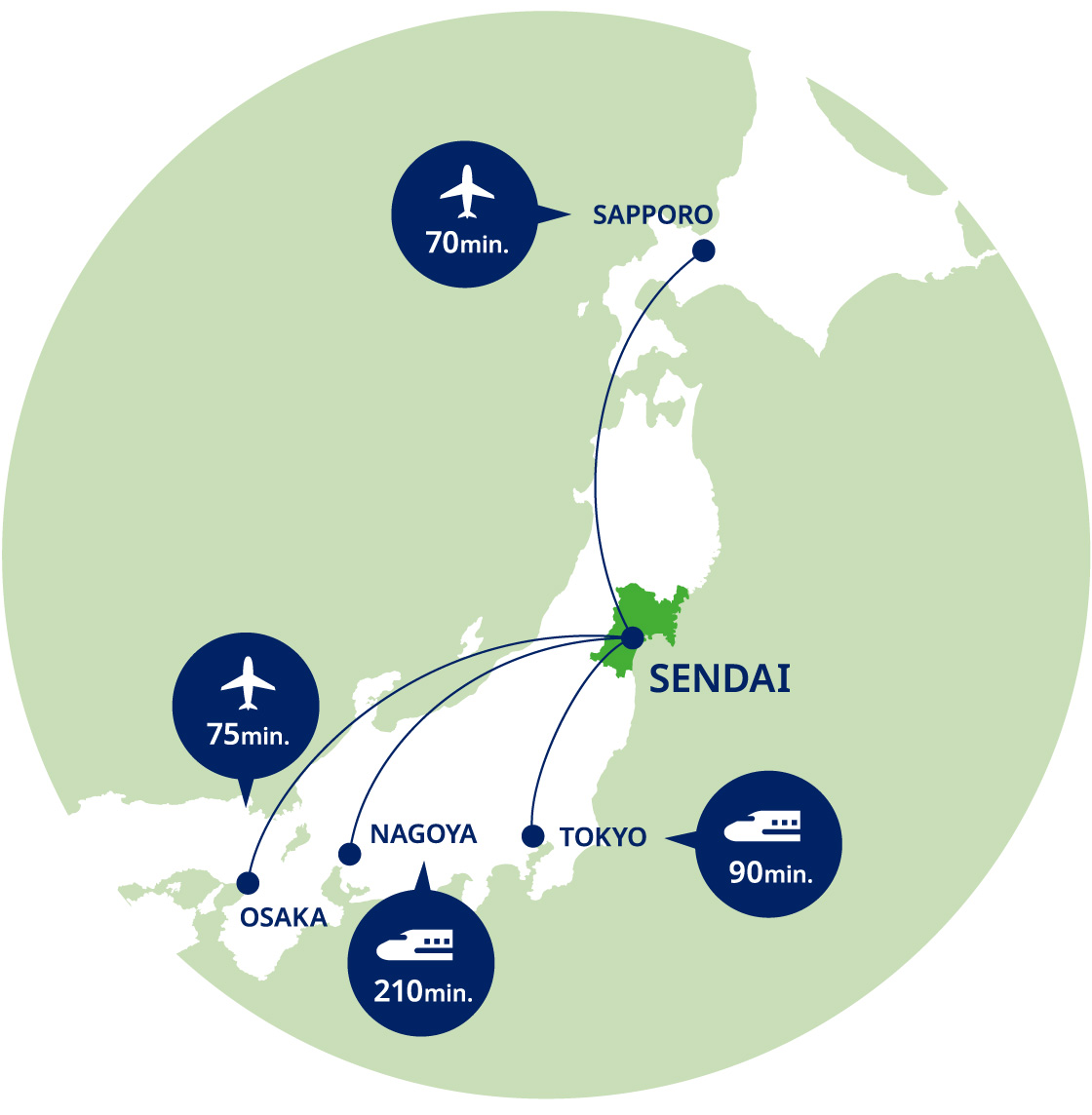
Travel Time (Average)
Tokyo-Sendai

Shinkansen
Approx 90min.
Nagoya-Sendai
Shinkansen
Approx 210min.
Osaka-Sendai

Airplane
Approx 75min.
Sapporo-Sendai
Airplane
Approx 70min.