Disaster Memorial Project
Ruins of the Great East Japan Earthquake :Sendai Arahama Elementary School
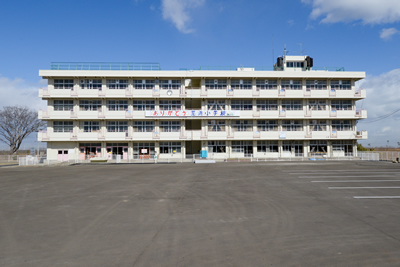
Sendai City is preserving the Arahama Elementary School building as a tsunami memorial, so as to pass down the lessons learned from the disaster to future generations while striving to reduce the impact of the damage and casualties in the event of a tsunami that may occur in the future. The memorial facility has been open to the public since April 2017.
Located about 700m inland from the coastline, Arahama Elementary School was attended by 91 students before the 2011 disaster. Although the tsunami flooded the school building with water up to the second floor, 320 persons, including students, teachers and staff of the school and nearby residents who had evacuated to the building, were all safely rescued by the next day.
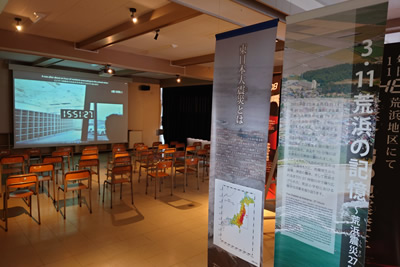
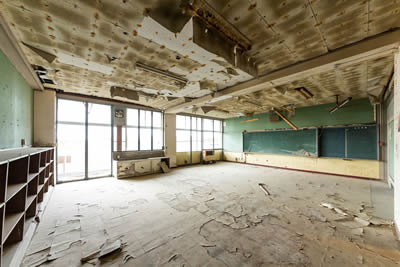
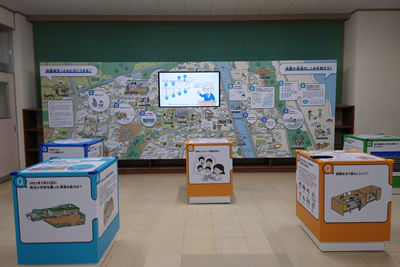
Inside the school building, visitors learn about the tremendous damage that can occur during a tsunami through photos of destroyed classrooms and photos taken immediately after the tsunami struck the school in 2011.
There are also DVDs on the history of the Arahama area and materials that recall the elementary school before the disaster so that these memories can be conveyed to future generations.
Inquiries
Disaster-Resilient and Environmentally-Friendly City Promotion Office,
City Planning Policy Bureau
mac001604@city.sendai.jp
Sendai 3/11 Memorial Community Center
This facility is located inside Arai Station, which is at the end of the Tozai Subway Line. At the eastern terminus of the Tozai Subway Line, located inside Arai Station,is the Sendai 3/11 Memorial Community Center. The center opened in February 2016 as a place to archive items so they can be used to pass down the experiences and lessons learned from the 2011 disaster. The 1st floor is a ‘communication space’ that provides information on the eastern coastal areas affected by the tsunami using maps and slides. On the 2nd floor, there is an exhibition room where visitors can see and learn about the destruction wrought by the tsunami and earthquake, the progress made thus far in our restoration and reconstruction efforts, and scenes of the eastern coastal areas before the disaster. There is also a studio used for holding workshops or other civic activities on the same floor. The rooftop is utilized as a space to rest.
The Memorial Community Center is not only a facility for displaying exhibits but also a place where people from all walks of life, including residents, residents’ groups and NPOs, are able to gather and take part in various activities and build new relationships.
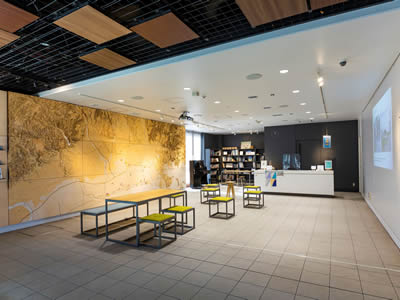
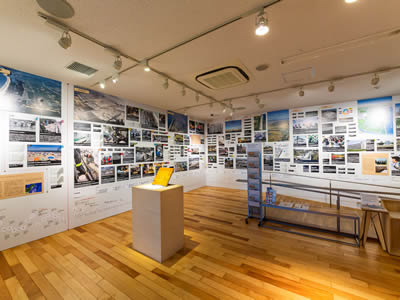
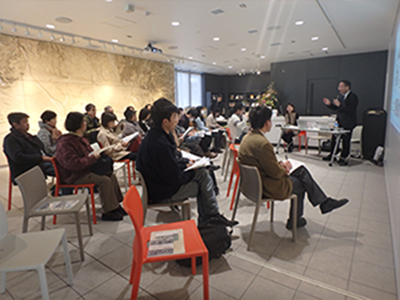
(February 21, 2016)
Inquiries
Disaster-Resilient and Environmentally-Friendly City Promotion Office,
City Planning Policy Bureau
mac001604@city.sendai.jp
Publication of Official Records
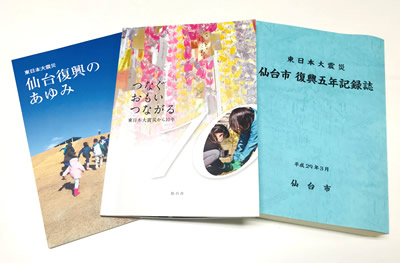
To share the experiences and lessons learned from the disaster and to prevent them from being forgotten, Sendai City has published a variety of records and public relations materials, including official documentation and newsletters that highlight initiatives by diverse actors such as citizens and community groups.
The publication Sendai City Five-Year Record of Recovery publication summarizes the city’s efforts, covering recovery, reconstruction, and disaster risk reduction over the five-year period from the disaster’s occurrence up to and including the recovery plan period. It documents the challenges faced during the Great East Japan Earthquake, the lessons learned, and the actions taken, with the aim of passing this knowledge on to future generations and helping prepare for future disasters. Copies were distributed to local governments across Japan.
Another publication, “Road to Recovery SENDAI”, is a written record made up of content such as interview articles, that center on initiatives by various actors such as citizens, local groups, NPOs, businesses, and volunteers that have driven reconstruction in the city.
A website has also been created called “Tsunagu Omoi Tsunagaru” (Where Hopes Come Together), which details how recovery and reconstruction efforts have progressed in the ten years following the disaster, as well as introducing the various thoughts and activities of the people, in relation to community building in the form of interviews with those involved and various visual materials. All publications can be viewed on the Sendai City Official Website.
*The website is only available in Japanese.
Center for Remembering 3/11
In May 2011, in a joint effort between citizens, experts from various fields, artists, and staff, the “Center for remembering 3/11” (“Wasuren!”) was opened within the Sendai Mediatheque as a platform to face and reflect on the earthquake, and record and convey the Great East Japan Earthquake Disaster and the process of recovery and reconstruction.
After observing and listening to the situations of a diverse range of individuals and performing the appropriate information right processing of video recordings, photographs, and recordings, the records are organized and preserved as “Chronicles of Disaster: Residents’ Collaborative Archive”. They are utilized in various forms such as being made available to the public on the center’s website, displayed in libraries, and are exhibited or screened. Additionally, it creates a place for enclosing records and holding discourse about the disaster.
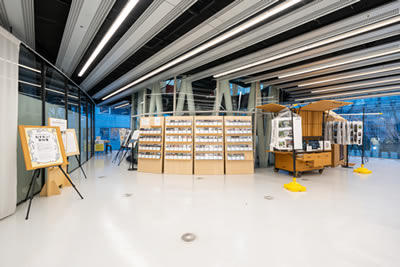
(Mediatheque 2nd floor)
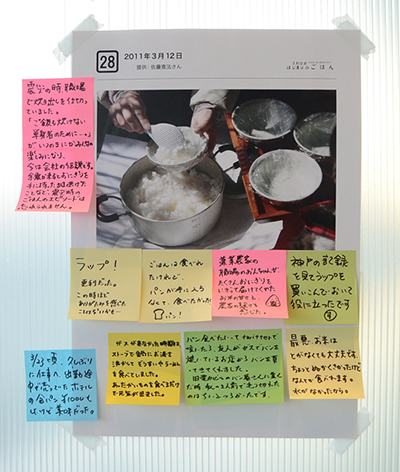
(Meals that mark a new start)’
(in collaboration with the Remember 3/11 Archive)
Inquiries
Activity Support Department,
Sendai Mediatheque
office@smt.city.sendai.jp
Passing down Lessons among Municipal Officials
Sendai City Staff-to-Staff Knowledge Transfer Guidebook Learning from Disaster Experience — From 3/11 Guide
This guidebook aims to foster an organizational culture that reflects the experiences and lessons learned from the Great East Japan Earthquake and other disasters. It outlines the direction of initiatives related to staff-to-staff knowledge transfer and provides explanations on how to utilize e-learning materials that can be undertaken individually, as well as dialogue-based worksheet materials for group learning.
Note: The dialogue-based worksheet materials are designed for municipal officials to learn about the judgment and decision-making required during disasters.
E-learning Materials — Learning from Sendai City’s Response to the Great East Japan Earthquake
The e-learning materials are designed not only to share the lessons and countermeasures from disasters, but also to explain the processes that led to those outcomes. They encourage proactive thinking for future disaster response. The materials are designed for use not only by municipal officials but also by community organizations and businesses.
Note: Additional e-learning materials will continue to be added over time.
Inquiries
Disaster-Resilient and Environmentally-Friendly City Promotion Office,
City Planning Policy Bureau
mac001604@city.sendai.jp