
Local Disaster Preparedness Measures
Sendai City Community Bosai Leaders
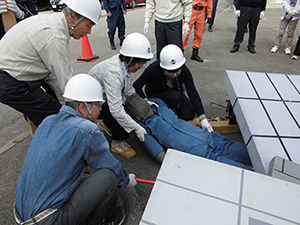
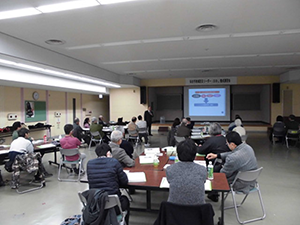
The Sendai Community-Based Disaster Prevention Leader (SBL) plays a central role in community-based disaster risk reduction. In normal times, SBLs take the lead in developing community-based disaster prevention plans tailored to local characteristics and in planning and conducting effective training programs. In times of disaster, they serve as core members of community disaster response organizations by directing evacuation guidance, rescue activities, and first aid.
To revitalize community disaster preparedness organizations and strengthen disaster resilience across the entire city, Sendai City launched its own training program for Sendai City Community Bosai Leaders in FY2012, immediately following the Great East Japan Earthquake.
By FY 2024, a total of 1,349 leaders had been trained 1,018 men and 331 women.
Going forward, in addition to training new SBLs and providing backup training sessions, the City will continue to raise public recognition of the SBLs system, encourage broader participation among women and younger generations, and enhance collaboration among SBLs.
operation
Areal Evacuation Center Operation Manuals
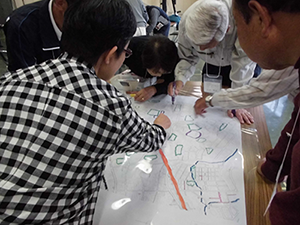
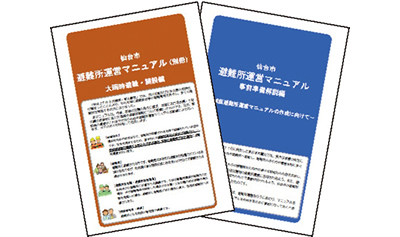
Based on the challenges during the operation of evacuation centers following the Great East Japan Earthquake, as well as feedback from community members who were directly involved in center management, Sendai City developed a new Evacuation Center Management Manual, which was put into use in FY 2013. Using this manual as a template, neighborhood associations, other community organizations, municipal authorities and facilities managers have worked to review the management for each evacuation center and to create the “Areal Evacuation Center Operation Manuals” that reflect the specific characteristics of each evacuation center. While considering local characteristics, evacuation center management efforts are carried out in accordance with the “Areal Evacuation Center Operation Manual”. These manuals also incorporate measures to address diverse needs, including support for women, persons with disabilities, foreign residents, and the evacuation of pets.
To address increasingly diverse natural hazards and to incorporate infectious disease control measures in evacuation centers, Sendai City has also developed additional templates—such as the “Evacuation and Opening Procedures for Heavy Rain” and “Additional Resources for COVID-19 Countermeasures”. Each community has been updating its own “Areal Evacuation Center Operation Manual” to reflect these additions.
Comprehensive Disaster Preparedness Drills
To save lives from disasters such as large-scale earthquakes and tsunamis, Sendai City aims to realize comprehensive disaster preparedness through the combined efforts of self-help, mutual assistance, and public assistance by implementing a well-balanced range of training activities throughout the year.
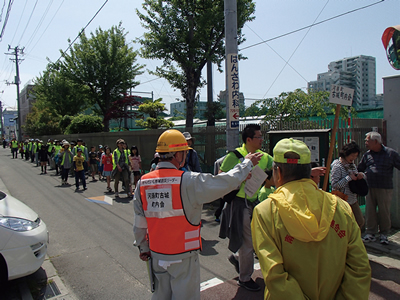
Around the time of Citizen Disaster Preparedness Day on June 12 every year, the City implements participatory drills (Shake Out training) in places such as businesses and households, where participants practice protecting themselves by sheltering under tables, etc. Other activities include checks of emergency stockpiles in households and businesses. Moreover, from October to November, stranded commuter drills are held, which assume a scenario in which public transport is suspended. Additionally, around the time of World Tsunami Awareness Day on November 5, tsunami evacuation drills are held in tsunami inundation areas on the eastern coastline.
In addition, each district’s comprehensive disaster preparedness drills aim to further strengthen community disaster resilience by encouraging community-led efforts to engage new groups of participants.
Inquiries
Disaster Risk Reduction Promotion Section,
Crisis Management Department
kks000130@city.sendai.jp